Hay Season Checklist: Servicing Your Baler, Mower and Rake Before You Cut
A pre-season service run-through for small hay gear — belts, chains, tines, blades, clutch and greasing — so a $30 part does not cost you a four-day weather window.
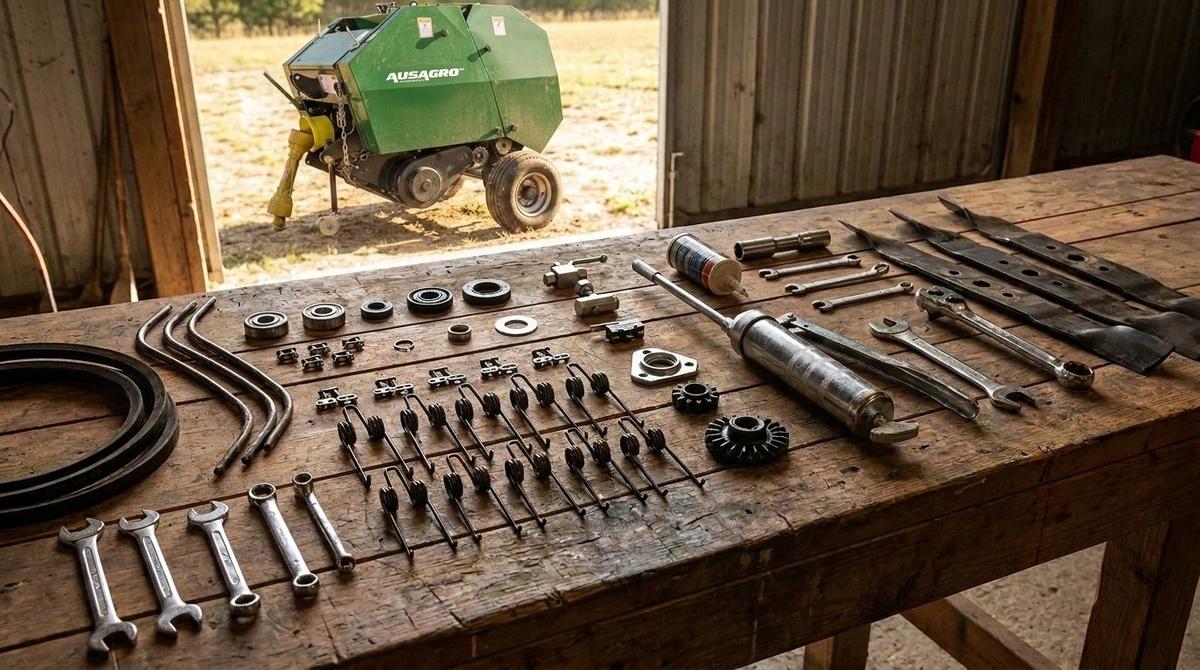
Hay season does not give you second chances. You get three or four clear days, and if a belt lets go on the second morning, the cut sits in the paddock while you wait on a part.
An afternoon in the shed before the season fixes almost all of that. Here is the run-through we give customers.
Before you start
Park on level ground, drop the implement, disconnect the PTO shaft and pull the tractor key. Nothing on this list needs the machine running.
Have on hand: a grease gun, a socket set, a torque wrench if you have one, degreaser, a rag, and the spares below.
1. The baler
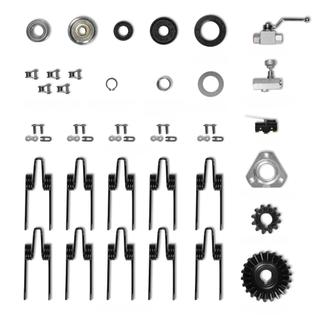
Pickup tines. Walk the full width of the pickup and look for bent, cracked or missing tines. A gap in the pickup leaves a strip of crop in the paddock and feeds unevenly, which is the number one cause of blockages. Tines are consumables — replace anything doubtful now, not mid-cut. We sell pickup tines in packs of 24.
Chamber belts and chains. Look for glazing, fraying, cracking across the belt back, and any stretch that lets the belt run slack. Check chain tension and look for tight or stiff links. A chain that will not articulate freely is close to failing.
Slip clutch. The clutch is what saves your driveline when you feed a lump. Check the disc for scoring and glazing, and free the clutch off if the machine has been sitting — a seized clutch protects nothing. Replacements: clutch disc for the mini round baler.
Twine or net path. Run the full path by hand. Look for burrs, worn eyelets and a knife edge that has gone dull. Load a fresh roll rather than starting the season on a half spool you cannot see the end of.
Hydraulics. Check hose runs for chafe and cracking, look for weeps at the fittings, and cycle the bale ejection through its full travel.
Tyres. Set the 16 × 6.5 in tyres to pressure. An under-inflated tyre changes the pickup height on one side.
Electrics. Check the 12V lead, the plug and the earth. Corroded pins are a five-minute fix in the shed and a very annoying fault in the paddock.
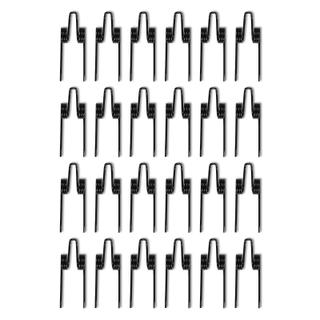
The maintenance kit for the mini round baler covers the common service items in one go.
2. The mower
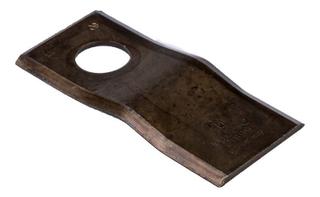
Blades. Inspect every blade for cracks, chips and uneven wear. Replace in matched sets — a mower with mismatched blade weights vibrates, and vibration eats bearings. Spare blades for the drum mower (RDM1650) are stocked here.
Blade bolts and pins. Check condition and retighten to spec. This is the one item on the list worth a torque wrench.
Gearbox oil. Our 1.65 m drum mower runs 80W90 EP gear oil. Check the level, and look at the condition — milky oil means water has got in and it needs changing.
Skids and guards. Worn skids let the drums cut lower than you intended and pick up dirt. Cracked guards are a safety item; replace them.
Driveline. Check the PTO shaft guards spin freely and the shear or slip protection is intact.
3. The rake-tedder
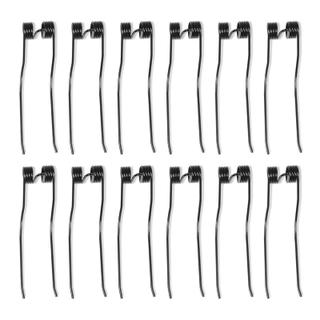
Spring teeth. Same story as the pickup tines: bent or missing teeth leave crop behind and make an uneven windrow, which then makes a poor bale. Spares: spring teeth for the mini hay rake-tedder, 12 per pack.
Rotor bearings. Spin each rotor by hand. Roughness, play or noise means the bearing is on its way out.
Height setting. Set the working height so the teeth just tickle the surface. Teeth digging into soil put dirt and ash into the hay and wreck feed quality.
4. Common to everything
Grease every nipple. Work through them methodically and count them against the manual so none get missed.
Bolts. Walk the machine and check for anything loose. Vibration finds every fastener you did not check.
Guards. All PTO and driveline guards present, intact and free to rotate. Non-negotiable.
Paint and rust. Touch up chips on the baked enamel finish. Surface rust that starts in autumn is a hole by the next season.
Storage. After the season, clean the crop residue out. Old hay holds moisture against steel and against bearings all winter.
The spares worth keeping on the shelf
Not because something will break, but because of when it breaks:
- A spare set of pickup tines
- A spare belt
- A spare clutch disc
- One extra roll of twine or net beyond your estimate
- Gear oil and grease
Every one of those is cheap next to a paddock of cut hay sitting in the rain. Browse the full range on our spare parts page.
Do it in the off-season
The best time for this list is the month before you need the machines — while parts can still be freighted out without it mattering. The worst time is the morning of day one.
Related reading: How to make hay on a small property · Mini round baler buyer's guide
All Aus Agro machines carry a 12-month warranty. If something is not right, talk to us — we hold wear parts in Australia.
Ready to make your own hay?
Small-farm balers, mowers and rakes built for acreage and hobby farms — delivered right across Australia, backed by a 12-month warranty and local service.
More guides
- How-tos4 min readTwine vs Net Wrap: Which Is Right for Small Bales?
- How-tos4 min readHow Much Tractor Do You Need to Run a Mini Baler?
- How-tos5 min readMini Round Baler Buyer's Guide: What to Look For in a Small Baler